
Turning Takeout Into a Resource: How FPI’s Webinars Are Advancing Foodservice Packaging Recovery
Improving the recovery of foodservice packaging is a core focus of the Foodservice Packaging Institute. To directly address long-standing challenges and opportunities across recycling and composting systems, FPI developed a series of webinars centered on the recovery of foodservice packaging items — from plastic containers and compostable takeout packaging to paper cups and pizza boxes.
Through research-driven discussions with material recovery facilities (MRFs), end markets, communities, composters and industry experts, the webinars are designed to clarify confusion, share real-world solutions and provide actionable pathways for increasing recovery rates across the country.
This work comes at a critical time. According to recent FPI data, millions of pounds of foodservice packaging are already being recovered each year through expanding recycling and composting programs, and the number of communities accepting these materials continues to grow. Yet confusion and inconsistent access remain barriers — challenges these webinars are working to overcome.
One of the most common sources of uncertainty surrounds paper-based takeout packaging. Questions about greasy pizza boxes, paper cups with protective coatings and food residue have fueled mixed messages for residents and, in many cases, led recyclable materials to end up in the trash. Recycling is a hyperlocal activity. Acceptance of foodservice packaging materials often depends on the capabilities of local MRFs, the equipment used to sort materials and the end markets available to process them.
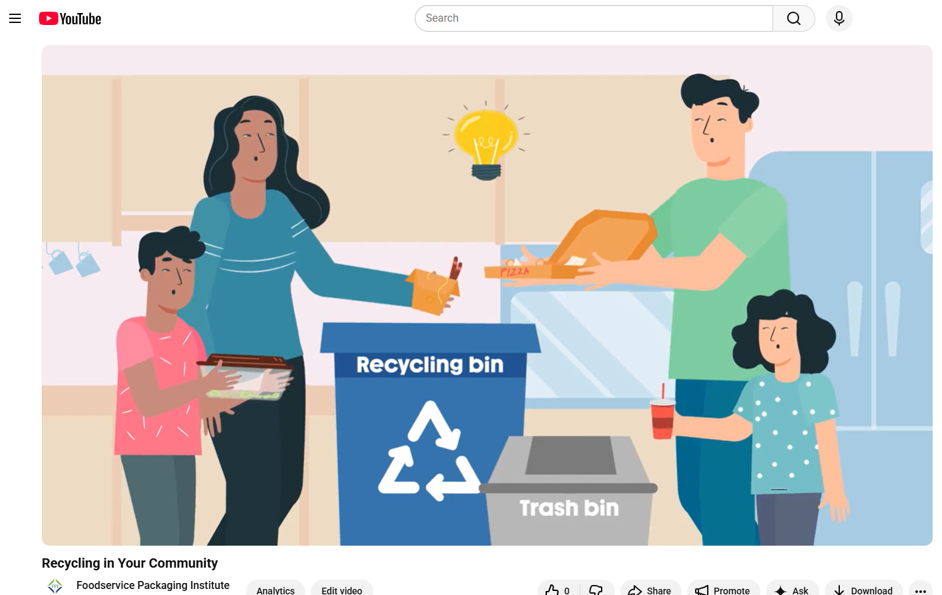
To address this, FPI hosted a webinar focused on recycling pizza boxes, paper cups and other paper-based containers. Representatives from MRFs, paper mills and communities already recycling these items shared how modern systems are increasingly able to manage food residue and how an expanding number of mills now accept paper cups in mixed paper and polycoat/carton bales. Their experiences reinforced an encouraging trend highlighted by FPI data: more communities across the U.S. are adding paper-based foodservice packaging to their recycling programs as end markets continue to expand.
Plastic cups and containers are another key focus of FPI’s recovery efforts. Takeout packaging made from resins, such as PET and polypropylene, offers safety and convenience, but historically, not all container shapes have been recovered at the same rates. During FPI’s Plastic Cup & Container Recycling Update webinar, researchers and industry representatives shared findings from recent studies, along with insights from MRFs and plastics processors on how advances in sorting technology are improving capture rates for themorforms and other containers.
These improvements are already making a difference. FPI data shows growing recovery volumes for plastic foodservice packaging as more facilities upgrade equipment and align bale specifications with end market needs. In turn, recycled plastics are increasingly being transformed into new products — strengthening the circular economy for takeout containers.
FPI’s recovery work also extends into composting, particularly as communities look for ways to reduce food waste. Food waste makes up over 24% of U.S. municipal solid waste and is responsible for a significant portion of landfill methane emissions. Takeout containers often contribute to this issue when leftover food and packaging end up in the trash due to inconvenience or confusion about disposal.
Through a webinar on compostable takeout containers in residential curbside programs, FPI shared findings from eight communities successfully collecting food scraps alongside certified compostable packaging. Program operators and composters explained how allowing food scraps and compostable containers in the same bin increases participation, simplifies sorting for residents and supports higher diversion rates — helping keep both food waste and packaging out of landfills.
Another major barrier to recovery is simply access to recovery programs. Even when packaging is recyclable, it must be actively accepted by community programs and clearly communicated to residents. FPI tackled this challenge in its webinar on expanding community recycling access and participation, which outlined practical steps for adding items like molded fiber drink carriers, pizza boxesand plastic and paper cups and containers to recycling programs.
Communities that have already expanded acceptance shared how collaboration with MRFs and end markets, combined with consistent education efforts, led to measurable improvements in participation and recovery. To support this progress, FPI introduced updated resources, including a Resident Education Toolkit and a step-by-step checklist, designed to help communities expand materials lists and engage residents more effectively.
Together, these efforts are producing real results. Some of FPI’s recent impact data highlights include:
- Millions of pounds of foodservice packaging recovered annually through recycling and composting programs.
- A growing number of communities accepting foodservice packaging items.
- Expanding end markets for recovered fiber and plastics supporting long-term recovery.
At the heart of this progress is education and collaboration across the recovery value chain. FPI’s webinar series brings together manufacturers, communities, MRFs, processors, composters and residents to share insights and align on solutions.
Improving recovery is not about one material or one program — it requires coordinated action. By developing targeted resources, sharing research-backed insights and providing practical tools, FPI is helping remove barriers and build systems that make recovery easier and more effective. As more communities adopt proven strategies and residents gain clearer guidance on recycling and composting foodservice packaging, recovery rates can continue to rise — keeping valuable materials in use, strengthening local programs and reducing waste sent to landfills.
Leave a Reply
Want to join the discussion?Feel free to contribute!